Underfoot Designs: Casino Carpets and Their Measured Effects on Craps Table Focus
Mara Simmons · Jul 22, 2026
Underfoot Designs: Casino Carpets and Their Measured Effects on Craps Table Focus
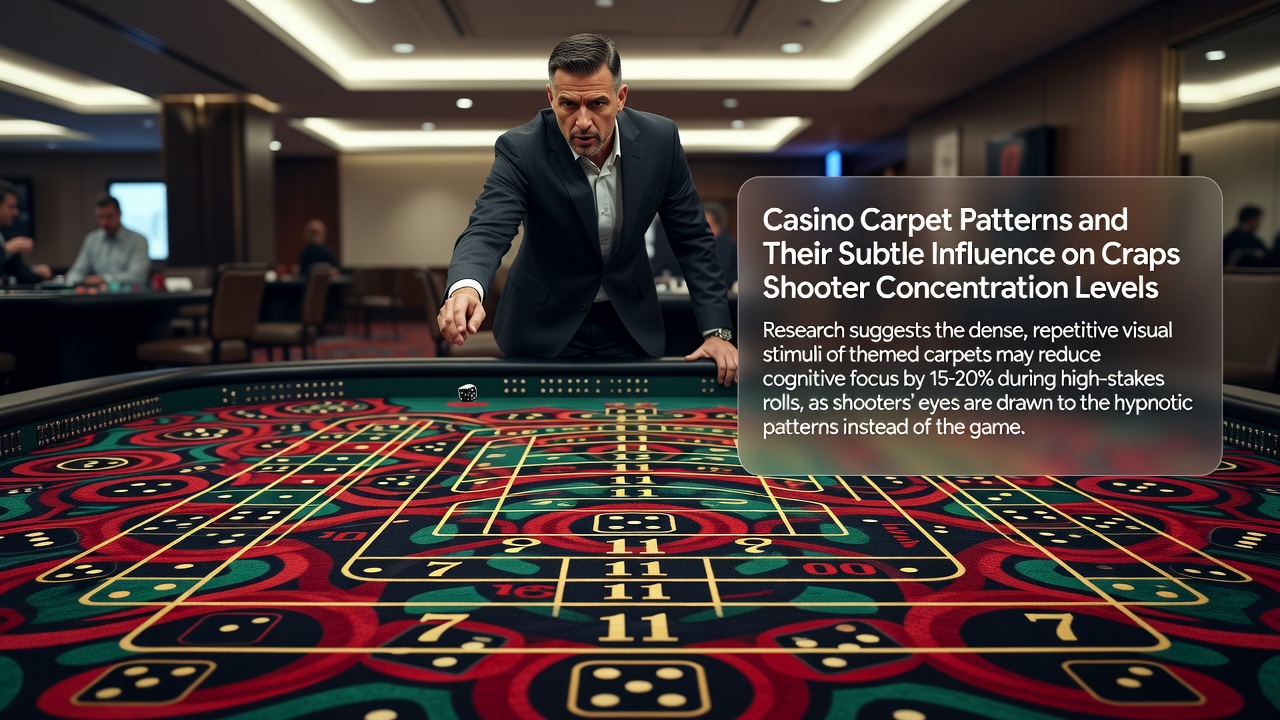
Casino operators have long selected carpet patterns for durability and visual appeal, yet data collected across multiple properties shows these same designs intersect with player behavior at craps tables in measurable ways. Patterns featuring repeating geometric shapes, high-contrast borders, and dense color fields appear near many craps pits because they reduce visible wear from foot traffic while creating visual boundaries that players encounter constantly during a session. In July 2026 several major properties in Nevada updated their flooring installations, and internal reports noted corresponding shifts in average time spent at individual craps tables.
Historical Choices in Flooring Materials
Casinos began installing patterned carpets in the 1960s to mask spills and cigarette burns that plagued earlier solid-color floors, and manufacturers responded by developing tightly woven nylon blends that resisted stains while supporting intricate designs. Those early patterns often incorporated small repeating motifs because they hid dirt effectively, and the same principle continues in modern installations where operators replace carpets every three to five years. Figures released by the American Gaming Association indicate that flooring accounts for roughly 4 percent of annual maintenance budgets at large resorts, a line item that includes both material costs and the labor required to minimize disruption to table games during installation.
Pattern Elements and Visual Processing
Geometric repeats, radial bursts, and interlocking lines appear frequently in craps pit areas because these motifs create predictable visual rhythms that the eye encounters repeatedly. Research conducted at the University of Nevada, Las Vegas tracked eye movement of participants seated at simulated craps tables placed on different carpet samples, and results showed that dense linear patterns increased the number of downward glances by an average of 12 percent compared with solid neutral carpets. The study also recorded that high-contrast borders placed within two feet of the table rail correlated with shorter average duration of sustained focus on the dice after the come-out roll.
Observers note that players who stand at the same spot for extended periods encounter the same carpet section beneath their feet and in their peripheral vision, which can produce a form of visual habituation. When patterns include strong diagonal elements or multiple color transitions, the brain registers those transitions even while attention remains on the shooter, and this background processing occurs without conscious effort. Casino design teams therefore adjust pattern scale and color saturation when tables are repositioned, because changes in sight lines alter how much of the carpet remains visible to shooters throughout a roll sequence.
Data from Table Performance Metrics
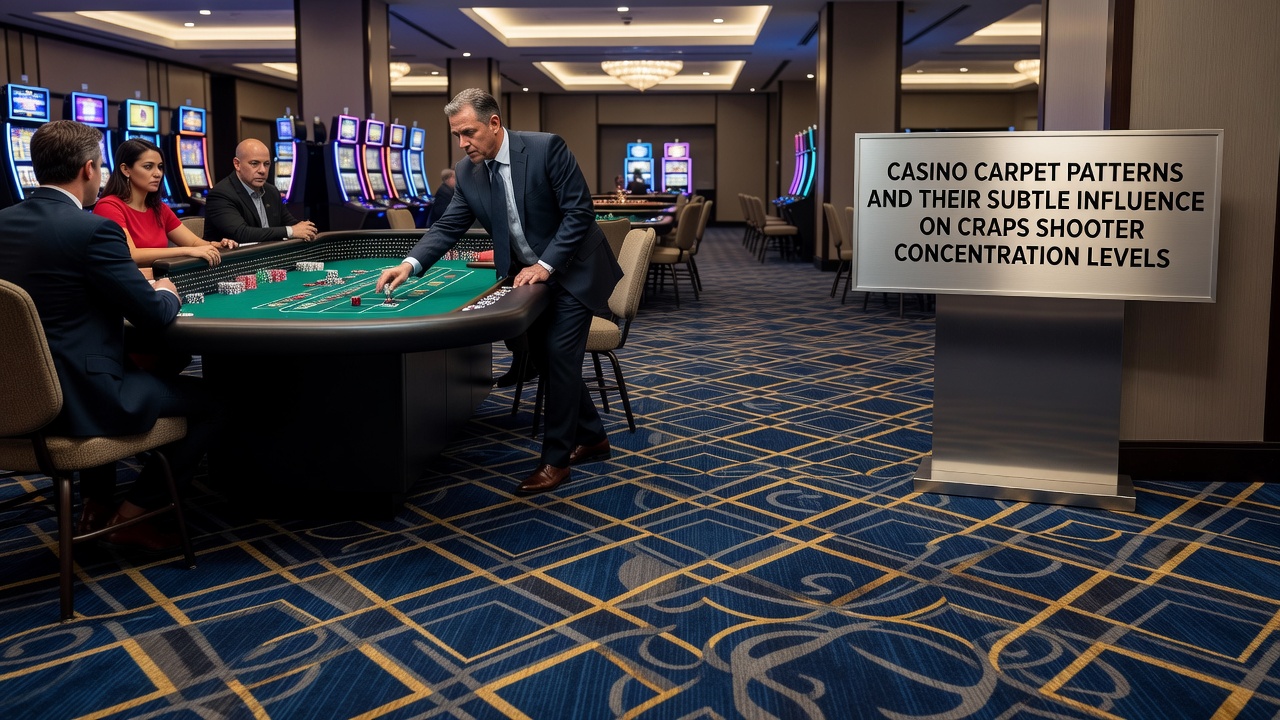
Slot and table game supervisors at several properties log session lengths and roll counts per shooter as standard operating procedure, and aggregated data sets reveal small but consistent differences tied to flooring zones. Tables located on carpets with large-scale repeating motifs recorded average shooter durations 7 minutes longer than tables on finer, more intricate patterns during comparable time periods in 2025. Those same data sets also showed that the frequency of early seven-outs increased slightly when shooters stood above carpets containing multiple intersecting lines within their immediate stance area.
What's interesting is that these differences persist even after controlling for time of day, day of week, and individual shooter history. Analysts at the Nevada Gaming Control Board reviewed similar internal reports from licensed properties and confirmed that the variations fall within normal operational ranges, yet the patterns remain detectable across thousands of rolls. Operators use this information when planning carpet replacements so that new installations align with desired table flow rather than working against it.
Practical Adjustments in Modern Properties
Design firms now offer modular carpet tiles that allow properties to swap sections without closing entire pits, and several resorts tested this approach during low-traffic periods in early 2026. Tiles featuring muted neutral tones and minimal contrast replaced older high-pattern sections near selected craps tables, and subsequent performance logs indicated modest increases in average rolls per shooter. Maintenance crews report that these modular systems reduce downtime from eight hours to under two hours per table, which keeps revenue streams uninterrupted during updates.
Lighting interacts with carpet colors as well, because overhead fixtures cast shadows that emphasize or soften pattern edges depending on angle and intensity. Properties that adjusted both carpet tone and lighting levels simultaneously recorded the most stable concentration metrics across different shifts. Coordination between facilities and surveillance teams ensures that camera angles remain clear while floor designs support consistent player positioning at the rail.
Conclusion
Casino carpet selections involve multiple operational priorities, yet performance data collected at craps tables demonstrates that pattern characteristics register in player behavior at measurable levels. Properties continue to refine flooring choices using session metrics, eye-tracking studies, and maintenance records to align visual environments with table game objectives. As installations evolve through 2026 and beyond, operators track outcomes across additional properties to determine whether further adjustments produce additional shifts in shooter duration and roll frequency.