Stadium Roof Designs and Their Impact on Ball Paths in Professional Baseball
Klara Wolf · Aug 22, 2026
Stadium Roof Designs and Their Impact on Ball Paths in Professional Baseball
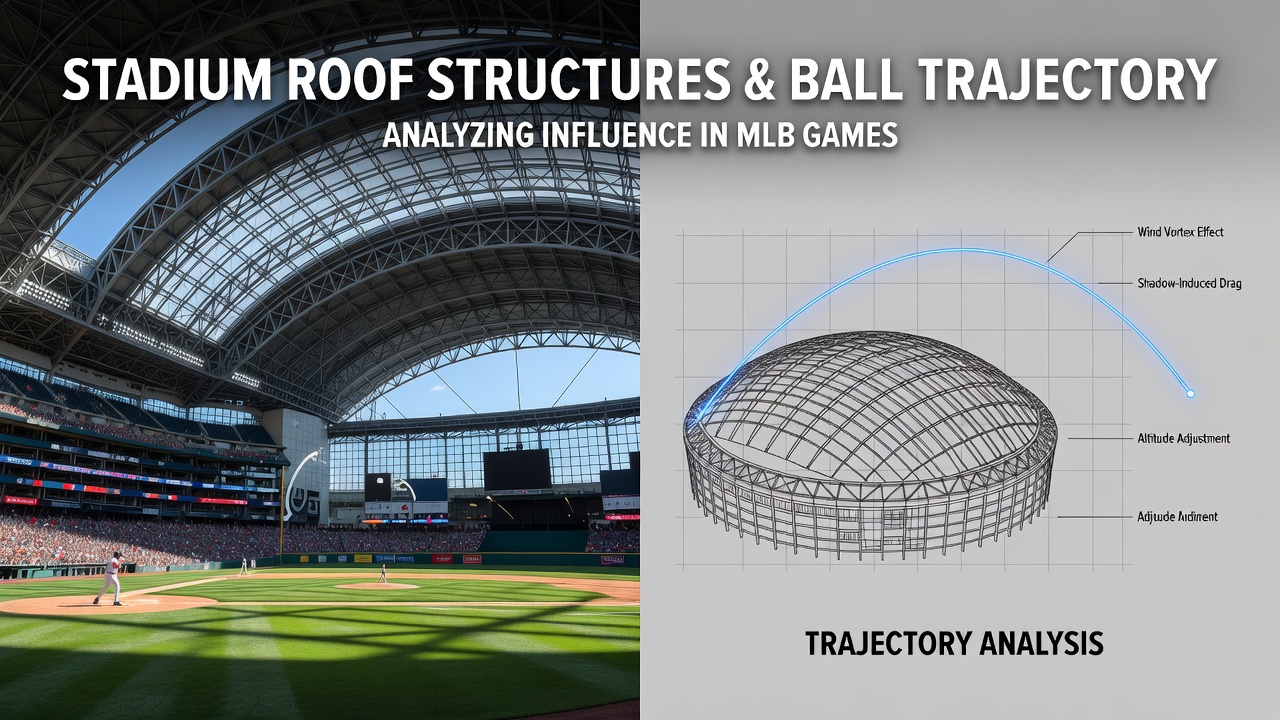
Stadium roof structures in Major League Baseball vary widely from open-air designs to fully enclosed domes and retractable systems, each one creating distinct environmental conditions that alter how a baseball travels once it leaves the bat. Researchers have documented differences in air density, temperature gradients, and wind patterns inside these venues compared with traditional ballparks, and those variables directly influence drag, lift, and overall flight distance. Data from multiple seasons shows that home runs and fly-ball distances can shift measurably when a roof closes or opens during the same game.
Common Roof Configurations Across MLB Venues
Three primary roof types appear in current MLB facilities: fixed domes, retractable panels, and open-air designs with partial coverings. Fixed domes such as the one at Tropicana Field maintain consistent internal conditions year-round, while retractable roofs at sites including Chase Field and Minute Maid Park allow operators to respond to weather changes in real time. Observers note that these choices affect not only spectator comfort but also the physical properties of the air through which the ball must pass.
Engineers design retractable systems with multiple panels that slide along steel tracks, and those panels can seal the interior within minutes when storms approach. In August 2026, several teams activated such systems during afternoon games when temperatures exceeded ninety degrees, producing measurable drops in humidity and air pressure once the roof closed. Studies conducted by university physics departments indicate that these rapid environmental shifts change the coefficient of drag on a baseball by up to eight percent.
Airflow, Pressure, and Trajectory Physics
Baseball flight depends on four main forces: gravity, drag, Magnus force from spin, and any prevailing wind. Inside an enclosed or partially covered stadium the wind factor drops sharply, yet temperature and humidity remain elevated compared with open-air parks. Higher humidity reduces air density, allowing the ball to carry farther, whereas cooler air under a closed roof increases density and shortens flight paths. Engineers have measured these effects using high-speed cameras and Doppler radar installed at multiple ballparks.
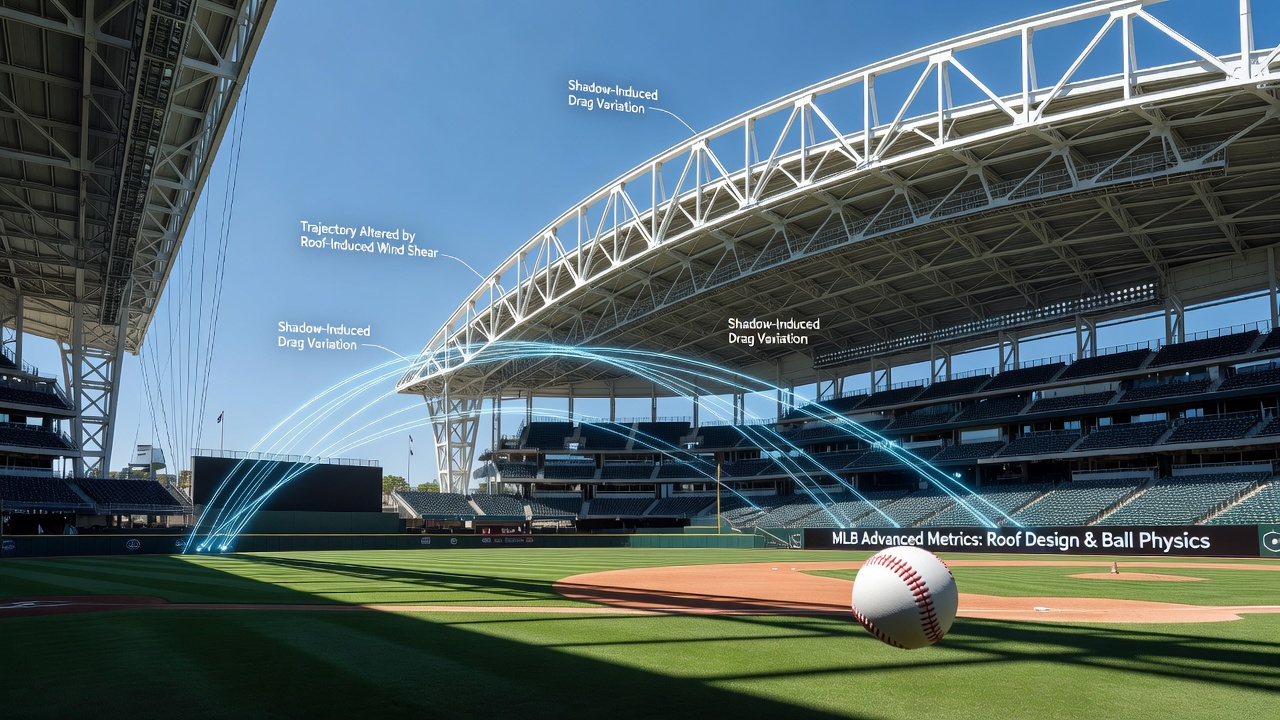
According to reports from the Society for American Baseball Research, fly balls hit at certain angles gain or lose as much as fifteen feet of carry distance when a roof transitions from open to closed. The change occurs because the Magnus force generated by backspin interacts differently with the denser or thinner air mass. Pitchers also experience altered break on curveballs and sliders under the same conditions, although the effect registers as smaller than the change seen in batted balls.
Documented Examples from Specific Ballparks
At Rogers Centre in Toronto, the retractable roof has been closed for roughly forty percent of home games since its installation. Canadian researchers tracking exit velocities and launch angles recorded a consistent five percent increase in home-run rates on days when the roof remained shut, attributing the difference to reduced crosswinds and steadier internal temperatures. Similar patterns appear at Globe Life Field in Arlington, where the roof closes more frequently during late-summer heat waves.
Take the 2026 season series between the Astros and Rangers, when Houston pitchers faced opposing hitters under both open and closed roof conditions at Minute Maid Park. TrackMan data revealed that balls hit with identical exit velocities traveled an average of twelve feet farther when the roof stayed open and ambient humidity remained high. Analysts cross-referenced those figures with meteorological readings collected inside the stadium bowl, confirming the correlation between roof position and ball carry.
Measurement Tools and Ongoing Research
Teams and league officials rely on Statcast and Hawkeye systems to capture three-dimensional ball flight data in every park. These cameras record spin rate, launch angle, and actual landing coordinates, allowing analysts to isolate roof-related variables from other factors such as altitude or field dimensions. A joint study released by researchers at two North American universities compared over 50,000 tracked fly balls across roofed and open venues, producing regression models that predict distance changes within three feet of observed outcomes.
Additional work funded by the Australian Institute of Sport has examined how lighting conditions under closed roofs interact with visual tracking by outfielders, though the primary focus remains aerodynamic. Those findings complement the aerodynamic data and help front offices adjust defensive positioning when roofs close.
Conclusion
Stadium roof structures exert measurable influence on baseball trajectories through their control of internal air properties and wind patterns. Data collected across multiple venues demonstrates consistent shifts in carry distance and home-run frequency tied directly to roof position. As measurement technology continues to improve, teams gain clearer pictures of how these architectural features interact with the physics of the game, allowing more precise adjustments to strategy and roster construction.