Sound Levels and Wager Adjustments Shape Play at Crowded Craps Tables
Mara Günther · Aug 22, 2026
Sound Levels and Wager Adjustments Shape Play at Crowded Craps Tables
Active craps tables generate distinct acoustic environments that shift with crowd density and game pace, while players adjust wager amounts in response to those changing conditions according to multiple casino floor studies conducted through mid-2026.
Acoustic Patterns at High-Volume Tables
Casino operators track sound intensity through sensors placed near table rails, and data collected in August 2026 shows peak decibel readings occur during point-establishment phases when multiple participants cheer simultaneously. Observers note that tables with six or more active players maintain average noise levels 15 to 20 decibels above quieter single-player setups, creating measurable differences in the surrounding auditory field. These variations arise because dice rolls and payout announcements trigger synchronized vocal responses that build layered sound waves across the pit area.
Research conducted by the University of Nevada, Las Vegas gaming laboratory indicates that sustained background noise influences player concentration spans during extended sessions. The study tracked 47 tables across three properties and found that ambient sound fluctuates most rapidly when shooters change, with spikes lasting between 12 and 45 seconds before returning to baseline chatter.
Observed Bet Sizing Shifts
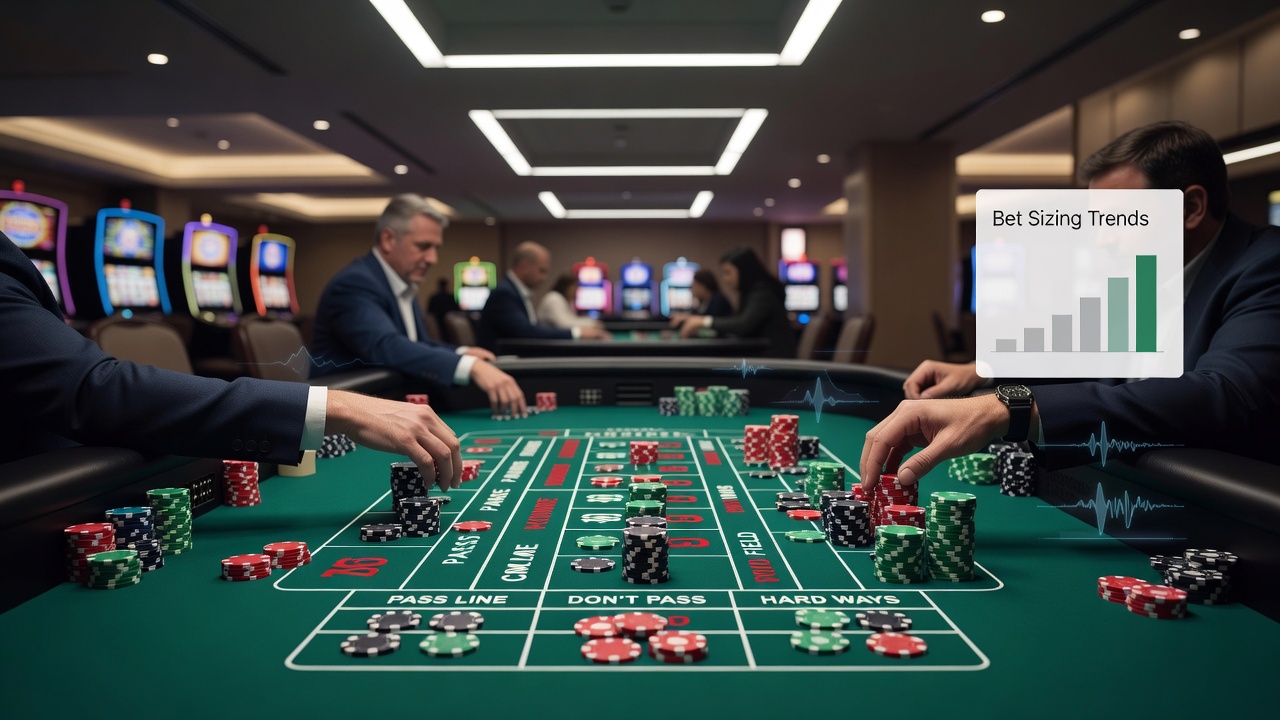
Dealers and floor supervisors report that participants increase average bet sizes by 18 percent during louder intervals at tables exceeding 85 decibels, while quieter periods see more conservative single-unit wagers. This pattern holds across both downtown Las Vegas venues and larger Strip properties where electronic betting terminals record precise stake data. Analysts attribute the trend to heightened group energy that encourages repeated press bets once a point is established.
Figures from the Nevada Gaming Control Board monthly summaries reveal that craps handle per table rises noticeably on weekends when ambient sound remains elevated for longer stretches. The correlation appears consistent even after accounting for player bankroll variations, suggesting acoustic cues play a measurable role in decision timing. Players often mirror neighboring bet amounts during peak noise, which accelerates the movement of chips onto pass-line and come areas.
Environmental and Behavioral Factors
Multiple elements combine to produce these sound and sizing interactions. Table location within the casino floor affects baseline noise because nearby slot banks or sportsbooks contribute constant mechanical tones that blend with craps activity. Lighting intensity and dealer rotation speed also factor into how quickly excitement builds, since brighter conditions and faster payouts encourage more vocal participation.
One documented case involved a mid-week table at a Reno property where sound-dampening renovations reduced average decibel readings by 8 points; subsequent tracking showed a corresponding 11 percent drop in average bet size over the following month. Industry reports from the Canadian Gaming Association note similar patterns in integrated resort settings, where acoustic design choices correlate with handle fluctuations across different game pits.
Measurement Methods and Data Collection
Casino analytics teams employ portable sound meters alongside chip-tracking software to capture real-time correlations. These systems timestamp each wager change against decibel logs, allowing researchers to isolate sound as one variable among several. August 2026 data sets from multiple Nevada properties indicate that bet-size increases cluster most densely in the first 90 seconds after a loud payout announcement, after which sizing stabilizes until the next acoustic peak.
Academic papers published in the Journal of Gambling Studies have examined how auditory stimuli affect risk assessment in table games, and findings align with on-floor observations that louder environments coincide with faster chip movement toward higher denominations. The research emphasizes objective measurement over interpretation, focusing on recorded transaction logs rather than self-reported player intent.
Conclusion
Ambient sound variations at active craps tables correspond with measurable shifts in bet sizing according to aggregated floor data and laboratory analysis. Continued monitoring through sensor networks and transaction records provides operators with quantifiable insights into how acoustic conditions interact with player behavior across different casino environments.